House rewiring in Malaysia: the process from quote to sign-off
By Adam · Updated 2026-06-24
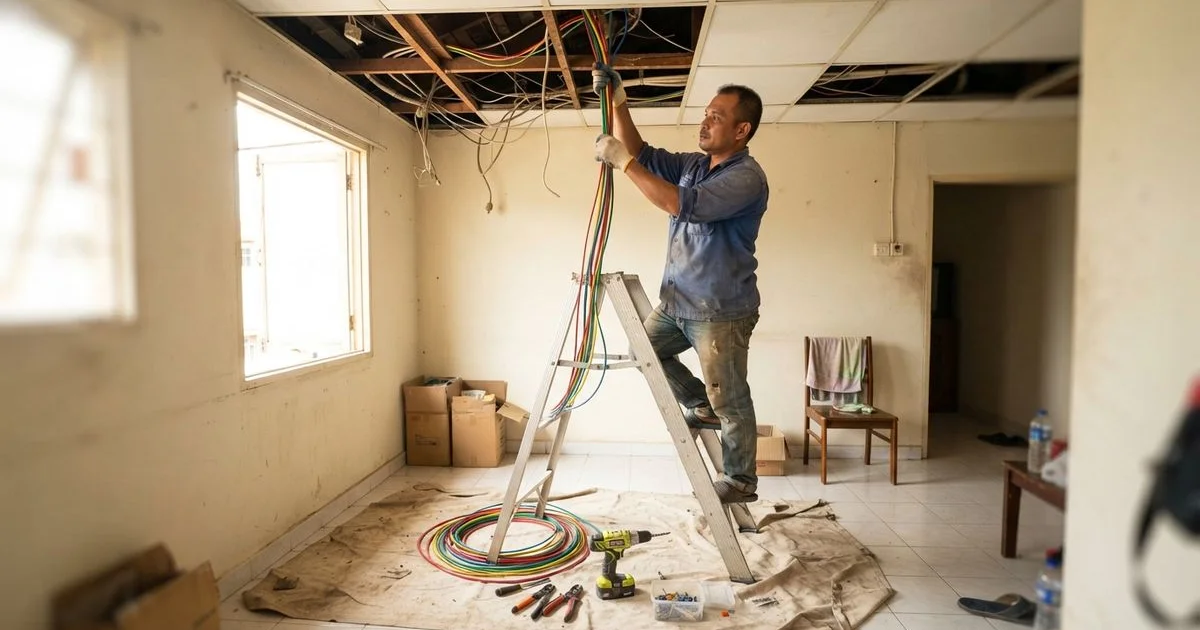
Rewiring is one of the more disruptive jobs a home goes through, mostly because the work happens inside walls and ceilings that then get closed up again. That’s exactly why the process matters more here than for a quick repair: once everything is plastered over, it’s hard to check anything without opening it back up. Knowing the stages ahead of time helps you plan around the disruption and know what to check before it disappears behind the wall.
If you’re still shortlisting a contractor, our directory of rewiring and renovation electricians is a good starting point, but the stages below apply regardless of who you hire. Picking the right person for this job matters as much as the process itself; our guide to choosing a reliable electrician covers the checks worth doing before you commit.
The stages of a typical rewire
| Stage | What happens | Disruption |
|---|---|---|
| Site visit and assessment | Existing wiring, consumer unit, and layout are surveyed | Low, single visit |
| Layout and quote | Circuit plan agreed, materials and scope confirmed in writing | None |
| Rough-in | Cables and conduit run through walls or ceilings before finishes go on | High, dust and access disruption |
| First fix testing | Circuits checked for continuity before walls close | Low |
| Closing up | Walls or ceilings patched, plaster and paint touch-up | Moderate |
| Second fix | Switches, sockets, and consumer unit fitted | Low to moderate |
| Final testing and sign-off | Earthing, breaker trip tests, and full circuit checks | Low |
Why the site visit and layout stage matters so much
A phone quote for rewiring isn’t worth much, because so much depends on the house itself: wall material, ceiling access, how many circuits are needed, and whether the consumer unit is being replaced alongside the wiring. During the site visit, a proper electrician surveys the existing setup and works out a circuit layout with you, including where new points for aircon, water heaters, or kitchen appliances should go. This is the point to raise anything you want changed, since adjusting the plan later, once cables are already run, is far more disruptive than getting it right upfront.
The rough-in stage is the messiest part
Running new cable through walls and ceilings before the finishes go on is where most of the dust, noise, and access disruption happens. Depending on your wall type, this can mean chasing channels into plaster or, for concrete walls and ceilings, more involved work that takes longer. A well-run job coordinates this stage with your renovation contractor if you have one, since electrical work generally needs to happen before plastering, tiling, or flooring closes everything up.
The point where you should actually look
Before walls or ceilings are closed up, ask to see the cable runs and the consumer unit layout. This is your only real window to check the work, since once it’s plastered over you’re relying entirely on trust. Look for cable that’s properly clipped rather than loose, a consumer unit with clearly labelled, correctly rated breakers, and confirmation that earthing has been connected throughout, not just assumed. A trustworthy electrician won’t rush you past this stage or discourage you from looking.
Testing before sign-off
Before the job is considered finished, every circuit should be tested, including earth continuity and a trip test on the RCCB (the earth leakage breaker). A good electrician demonstrates this rather than just saying the job is done. This is also the point where you should get some form of written confirmation of what was done, which matters later for insurance purposes or if you ever sell the property.
Planning around the disruption
Because rewiring happens in stages, it’s worth asking your electrician how they’ll sequence the work so you’re not left without power to the entire house at once. Most jobs can be planned room by room or circuit by circuit, though full rewires still mean some days with limited power in whichever section is being worked on. If you’re coordinating this alongside a broader renovation, confirm the electrical work’s timeline against your other contractors early, since poor sequencing between trades is a common source of delays and rework.
See our methodology for how we score rewiring specialists on past work and communication, and browse the full directory from the homepage to compare providers.
FAQ
- How long does rewiring a house take?
- For a full house it can run anywhere from a few days to a couple of weeks, depending on size and scope. A partial rewire covering just a kitchen or a few rooms is faster. Access difficulty, such as concrete ceilings or tiled walls, adds time regardless of house size.
- Will I have power the whole time?
- Usually not the whole house at once. A well-planned job works room by room or circuit by circuit so you're not left with zero power for the entire duration, but expect some sections to be without power for parts of the work.
- Do I need to be there the whole time?
- Not for every stage, but it helps to be available at the start to confirm the layout and circuit plan, and again before walls are closed up so you can see the work while it's still visible.
- What should I check before the walls get closed up?
- Ask to see the cable runs, check that the consumer unit is clearly labelled per circuit, and confirm earthing and breaker testing were done properly. Once the walls are closed, checking any of this becomes far harder.