Solar panel installation: what happens from site visit to switch-on
By Adam · Updated 2026-06-22
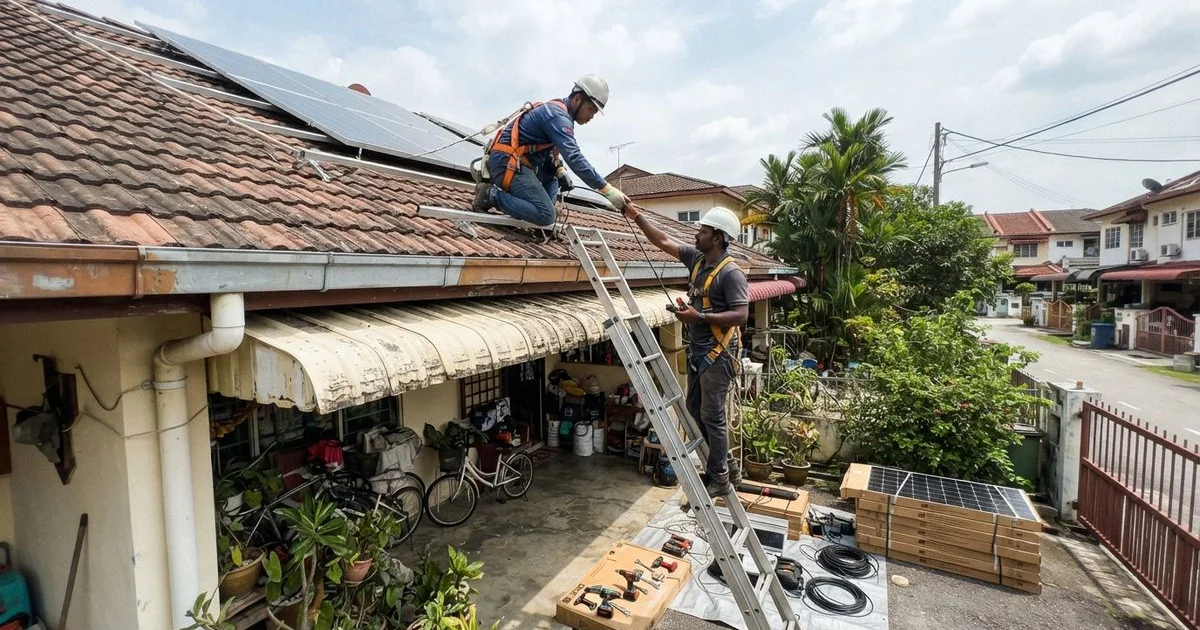
Solar installation isn’t a single visit and done. It’s a process with a paperwork stage and a physical stage, and knowing what happens at each point makes it easier to tell whether an installer is moving things along properly or leaving you in the dark. If you’re still comparing providers, our directory of solar panel installers is a good place to start once you know roughly what to expect.
The stages, in order
| Stage | What happens | Rough timing |
|---|---|---|
| Site visit and assessment | Roof condition, orientation, shading, and existing wiring are checked; usage reviewed | Single visit |
| Quote and system design | Panel count, wattage, inverter capacity, and mounting plan finalised | A few days to a week |
| Paperwork submission | Application to TNB and SEDA under the Net Energy Metering scheme | Several weeks, varies by provider |
| Physical installation | Panels mounted, wired to inverter, connected and tested | One to three days |
| Inspection and commissioning | System tested, inspected, and formally approved for grid connection | Days to a few weeks after installation |
| Switch-on and handover | System goes live, monitoring set up, warranty documents provided | Same day as final approval |
The site visit is where the real quote starts
A phone estimate for solar is close to meaningless, because so much depends on your roof. The site visit is where an installer checks your roof’s structural condition, which direction it faces, whether nearby trees or buildings cause shading during parts of the day, and how your existing consumer unit is set up. They should also ask about your actual electricity usage rather than just going off your roof’s maximum capacity, since a system sized to your usage pays back faster than one sized purely to fill available roof space.
If an installer skips this step and gives you a firm quote over the phone, treat that as a sign to look elsewhere, not a convenience.
Paperwork runs in parallel with, not after, physical work
One of the more common points of confusion is assuming installation happens first and paperwork follows. In practice, TNB and SEDA submission under the Net Energy Metering scheme usually needs to happen before or alongside the physical install, since the system isn’t legally allowed to connect to the grid until it clears. A properly registered installer manages this as part of the job. If a provider is vague about who’s handling the TNB and SEDA submission, or seems unfamiliar with the process, that’s a real red flag, not a minor gap.
What the installation days actually look like
Once materials are on site, mounting the panels, running the wiring to the inverter, and connecting everything typically takes one to three days for a residential system, depending on size and roof complexity. During this stage, a good installer keeps cable runs tidy, uses corrosion-resistant mounting brackets, and places the inverter somewhere ventilated and out of direct sun rather than wherever’s most convenient. Ask to see this before they leave, since a rushed installation often shows up as messy cabling or a poorly placed inverter, even if the panels themselves look fine from the ground.
Testing before switch-on
Before the system goes live, it should be tested for proper earthing, correct wiring, and safe operation. This isn’t a step to skip regardless of how eager everyone is to see it switched on. A competent installer walks you through what was tested and what the results mean, rather than just flipping a switch and calling it done.
After switch-on
Once commissioned, most systems come with a monitoring app so you can track output and confirm the system is performing as expected. It’s worth asking your installer to walk you through this at handover, along with what warranty covers the panels versus the inverter, since these commonly carry different warranty lengths. Panels themselves need little upkeep beyond occasional cleaning if dust or bird activity builds up, but it’s worth having the system checked every year or two to confirm connections are tight and the inverter is still performing as it should.
For more on how we score solar installers on licensing and workmanship, see our methodology, and visit the homepage to compare providers across all electrical categories.
FAQ
- How long does the whole solar installation process take?
- Physical installation for a home system usually takes one to three days once materials are on site. The full process, including the site survey and TNB and SEDA approval, typically runs several weeks to a couple of months depending on how quickly the paperwork clears.
- What happens during the site visit?
- The installer assesses your roof's condition, orientation, and shading, checks your existing electrical setup, and reviews your electricity usage to recommend a system size. This visit is what a proper quote should be based on, not a phone estimate.
- Do I need to be home during installation?
- It helps for at least part of it, particularly at the start and the final walkthrough, but much of the physical mounting and wiring work doesn't require you to be present the whole time. Confirm with your installer what access they need to your roof and consumer unit.
- What happens after the panels are physically installed?
- The system needs to be tested, inspected, and then approved through TNB and SEDA under the Net Energy Metering scheme before it's legally switched on and connected to the grid. Your installer should walk you through the monitoring setup once it's live.