Electrical safety checks for an aging parent's home
By Adam · Updated 2026-07-10
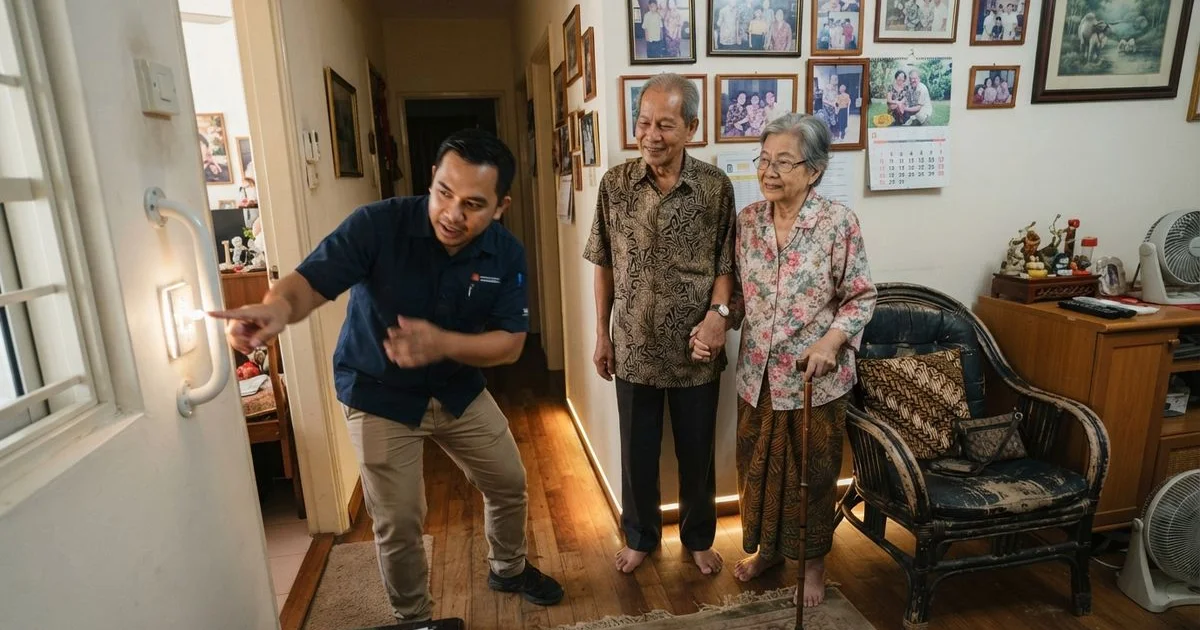
Checking in on an aging parent’s home usually focuses on the obvious things: mobility around the house, medication, general safety. Electrical wiring often gets overlooked, partly because it’s invisible and partly because raising it can feel like second-guessing how someone has managed their own home for decades. A practical, low-key approach makes this easier for everyone. This is general safety information, not a substitute for a professional inspection.
What to look for during a visit
| What to check | Why it matters for an aging parent’s home |
|---|---|
| Extension cords powering multiple devices | Common near a favourite chair or bed, and a real fire and trip risk |
| Old fuse box instead of a modern consumer unit | Doesn’t trip as reliably, and harder to reset for someone with limited mobility |
| Sockets that are hard to reach or see clearly | Can lead to forcing plugs in incorrectly or ignoring a visible fault |
| Cords running under rugs or across walkways | A trip hazard, and cords can wear through faster when walked on |
| Medical equipment on a shared or older circuit | Worth its own dedicated, reliable circuit if used regularly |
| No clear light near the consumer unit or entryway | Makes it harder to safely check or reset anything at night |
Extension cords are the most common everyday risk
It’s common for a favourite chair, bed, or side table to end up surrounded by a tangle of extension cords powering a fan, a lamp, a phone charger, and sometimes medical equipment. This is exactly the kind of setup that raises fire risk over time, and it’s also a practical hazard for someone with reduced mobility who might trip over a cord or struggle to safely unplug something. If you notice this during a visit, it’s often a sign that a spot needs a proper additional socket, not just fewer things plugged in. The same wiring habits matter at the other end of the household too; our guide to childproofing electrical sockets and wiring covers what to check if there are young children in the home as well.
Old fuse boards are harder for anyone to manage safely
A ceramic fuse box instead of a modern breaker-based consumer unit is physically harder to reset and often not clearly labelled. For an aging parent, this can mean either not resetting it correctly, or avoiding dealing with it at all when something trips. Upgrading to a modern, clearly labelled consumer unit is a genuinely practical improvement, not just a cosmetic one.
Reduced mobility changes what counts as risky
The wiring risk itself in an older home isn’t different because an elderly person lives there, but the practical consequences often are. Someone who reacts slower to a tripping hazard, has more difficulty reaching a high or awkward socket safely, or is less likely to notice a subtle warning sign like a slightly warm switch is at higher practical risk from the same underlying issue that a younger, more mobile person might catch and address sooner.
This is also worth considering for a parent living alone. If a breaker trips at night, can they safely reach and reset the consumer unit, or would they be left without power, and without an easy way to fix it, until someone else arrives. A clear light near the consumer unit, and making sure someone else has a spare key or knows how to help remotely, are small things that matter more than they might seem.
How to raise it without it becoming a difficult conversation
Leading with “your wiring might be dangerous” tends to put people on the defensive, especially in a home they’ve managed independently for years. It’s usually easier to frame the conversation around something specific and practical: making sure a favourite lamp has reliable power, or getting an extra socket near a chair so cords aren’t stretched across the floor. A concrete, useful fix is an easier yes than an abstract safety concern.
When it’s worth arranging a professional visit
A visual check during a family visit is a good starting point, but it isn’t a substitute for a proper inspection, particularly for a home that’s been lived in for decades without any formal electrical review. If you notice several of the signs above, or if your parent mentions a breaker that trips often or a switch that feels warm, it’s worth arranging a professional visit rather than relying on periodic family check-ins alone.
See our methodology for how we score electricians on communication and reliability, and start from the homepage to find someone patient enough to explain things clearly during the visit.
FAQ
- What should I check first when visiting an aging parent's home?
- Start with the consumer unit and any extension cords in daily use. An old fuse box instead of a modern breaker board, and extension cords powering multiple appliances near a favourite chair or bed, are two of the most common issues worth addressing early.
- How do I bring this up without it feeling like an intrusion?
- Frame it around a specific, practical goal, like making sure a favourite lamp or medical equipment has reliable power, rather than a general conversation about their home being unsafe. Most parents respond better to a specific fix than a broad critique.
- Are older homes with elderly residents actually higher risk?
- The wiring risk is the same as any older home, but the practical risk is often higher because of reduced mobility, slower reaction time to something like tripping over a cord, and sometimes a reluctance to spend on repairs that seem unnecessary.
- Is it worth paying for a full inspection versus just checking visually?
- For a home your parent has lived in for decades, especially if wiring has never been formally checked, a professional inspection is worth it. A visual check by a family member is a good first step, not a substitute for one.