Electrical fire risks in Malaysian homes: common causes and prevention
By Adam · Updated 2026-06-29
Electrical fires don’t usually start with a dramatic single event. They build from ordinary habits and ageing wiring that go unaddressed for long enough. Understanding what actually raises the risk, and what genuinely reduces it, is more useful than vague caution. This is general safety information, not professional or insurance advice.
The everyday causes that matter most
| Cause | Why it’s a risk | What reduces it |
|---|---|---|
| Overloaded circuits or extension cords | Draws more current than the circuit or cord is rated for, generating heat | Spread heavy appliances across circuits, avoid daisy-chaining extensions |
| Old or degraded wiring | Cracked or brittle insulation exposes live conductors | Have wiring older than 20 to 25 years inspected |
| Unlicensed DIY wiring work | Incorrect wire sizing or connections not properly protected | Use a registered electrician for anything beyond plug-and-play tasks |
| Faulty or damaged appliances | Internal faults can overheat or short | Unplug and repair or replace appliances showing damage |
| Moisture or pest damage to wiring | Water or gnawed insulation compromises protection | Address leaks promptly, have wiring in affected areas checked |
| Overloaded consumer unit for current load | Circuits not sized for modern appliance demand | Have a load assessment done before adding heavy appliances |
Overloaded circuits are more common than people think
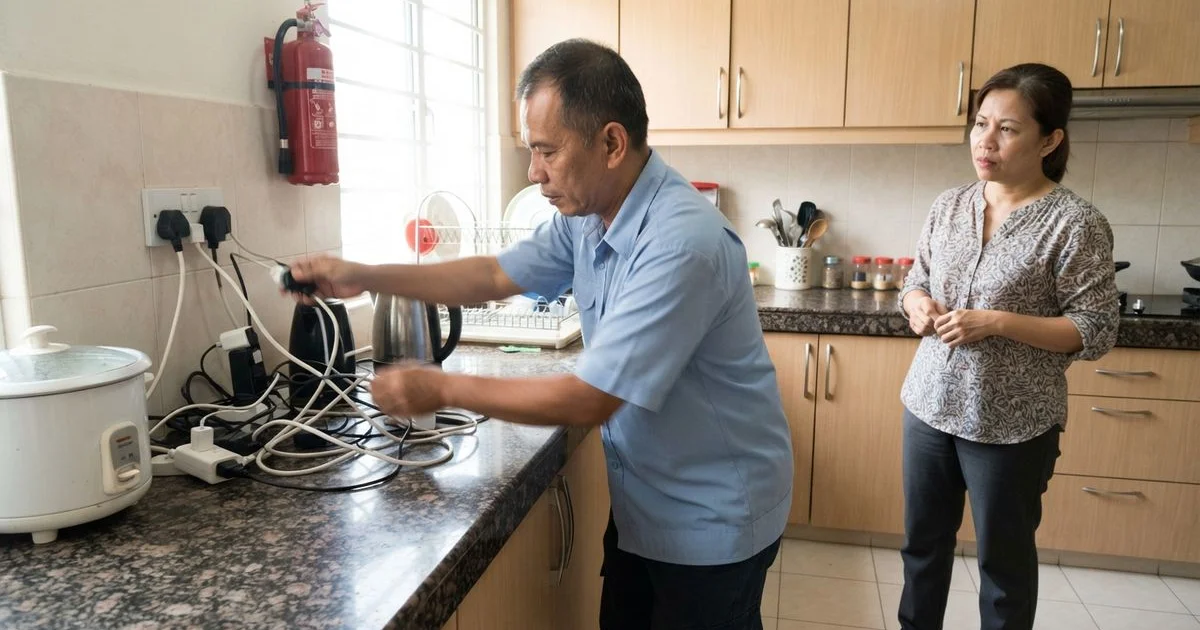
Running an aircon unit, a kettle, and a rice cooker off the same extension cord isn’t unusual, but it’s exactly the kind of everyday habit that raises risk. Extension cords and multi-plug adapters are designed for light, temporary loads, not as a permanent way to power multiple heavy appliances. If you find yourself relying on extensions for things that are plugged in most of the time, that’s usually a sign you need more properly wired sockets, not more extension cords.
Old wiring degrades even if nothing looks wrong
Wiring installed decades ago, particularly with rubber or older PVC insulation, degrades over time even without any visible damage. Heat, humidity, and simple age cause insulation to crack or become brittle, which increases the chance of exposed live wiring somewhere inside a wall you can’t see. Homes older than 20 to 25 years that have never had their wiring inspected are worth checking proactively, rather than waiting for a visible sign of trouble.
DIY work is a common thread in emergency call-outs
A wiring fault caused by earlier DIY work is a pattern that comes up often enough in emergency electrician call-outs to be worth calling out directly. Incorrect wire sizing, connections that aren’t properly protected, or circuits that weren’t tested after the work was done can all sit quietly until something fails. If your home has had any DIY electrical work done, even years ago, it’s worth having a licensed electrician take a look, particularly around anything added since the original wiring was installed.
Appliances and load add up over time
Modern households run more electrical load than the wiring in an older home was ever designed for. Air-conditioning units, induction hobs, and multiple large appliances running at once put more demand on circuits and consumer units that may have been sized for a simpler era. If you’ve added heavy appliances since your home was originally wired, particularly aircon units, it’s worth having an electrician confirm your existing circuits and consumer unit can actually handle the added load, rather than assuming they can.
Practical steps that actually reduce risk
A few habits meaningfully lower fire risk without requiring major work: avoid running heavy appliances through extension cords long-term, don’t daisy-chain multiple extensions together, unplug or repair appliances showing any sign of damage, and address any water leaks near wiring or the consumer unit promptly rather than letting them sit. For anything structural, like old wiring or an undersized consumer unit, a professional inspection is the only way to know for certain rather than guessing from the outside.
If you’re noticing any of the warning signs mentioned here, it’s worth having them checked rather than waiting. See our methodology for how we score electricians on responsiveness and workmanship, and visit the homepage to find one near you.
FAQ
- What's the most common cause of electrical fires at home?
- Overloaded circuits and extension cords are among the most common everyday causes, along with degraded old wiring and unlicensed DIY work. Faulty appliances and damaged insulation from moisture or pests also contribute.
- Are extension cords actually dangerous?
- Used properly, they're fine for short-term or light loads. The risk comes from running high-draw appliances through them long-term, daisy-chaining multiple extensions together, or using a cord that's damaged or undersized for what's plugged into it.
- How can I tell if my home's wiring is a fire risk?
- Warning signs include warm switches or sockets, breakers that trip repeatedly, a burning smell, or wiring older than 20 to 25 years that's never been inspected. Any of these are worth having checked by a professional.
- Does home insurance cover electrical fires?
- Coverage depends on your specific policy, and claims involving electrical faults can be complicated if the wiring wasn't done by a properly licensed person. This is general information, not insurance advice; check your policy terms directly.