Warning signs of dangerous wiring: when to call an electrician now
By Adam · Updated 2026-06-26
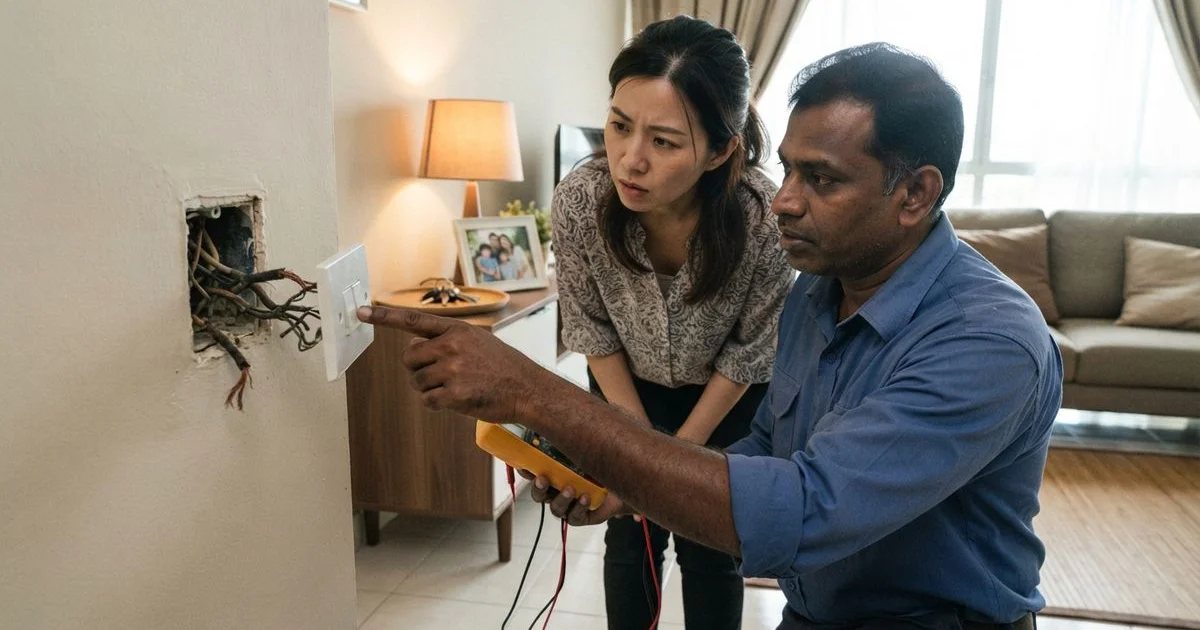
Wiring problems rarely announce themselves clearly. Most electrical faults build up quietly, showing small signs for weeks or months before anything dramatic happens. Knowing what those early signs look like, and which ones genuinely can’t wait, is one of the more useful things a homeowner can learn. This is general information, not a substitute for a professional inspection.
The signs worth paying attention to
| Sign | What it might mean | Urgency |
|---|---|---|
| Burning smell near sockets or the consumer unit | An active fault, possibly overheating insulation | Stop and call an electrician immediately |
| Visible sparks or scorch marks | A serious fault in progress | Stop and call an electrician immediately |
| Switch or socket warm to the touch | Loose connection or overloaded circuit | Have it checked soon, don’t ignore it |
| Breaker trips repeatedly | A fault on that circuit, or overload | Have it checked, don’t keep resetting it |
| Lights flicker across multiple rooms | Loose connection or overloaded supply | Have it checked within a few days |
| Buzzing sound from a switch or panel | Loose or arcing connection | Have it checked soon |
| Discoloured or cracked sockets | Heat damage building up over time | Have it checked, avoid using that socket meanwhile |
| Old ceramic fuse board instead of a modern consumer unit | Outdated protection, doesn’t trip as reliably | Worth a full assessment, especially before renovation |
Why these signs matter more than they look
A single flickering bulb is usually nothing. The pattern that matters is when several of these signs show up together, or when something that used to be normal starts happening more often. A breaker that’s tripped once in five years is different from one that’s started tripping weekly. A socket that’s always felt slightly warm is different from one that’s warm today and wasn’t yesterday. Trust the change, not just the presence of any one sign in isolation.
The signs that mean stop, not schedule
Burning smells, visible sparks, and scorch marks are not wait-and-see situations. If you notice any of these, don’t try to investigate further yourself. Switch off the affected circuit at the consumer unit if you can do so safely, and call an emergency electrician rather than a scheduled appointment. These signs point to a fault that’s actively happening, not one that’s slowly building.
The signs that are worth booking soon, not urgently
Warm switches, repeated breaker trips, buzzing sounds, and discoloured sockets are a different category. They’re not usually an immediate danger, but they tend to get worse rather than resolve on their own, and catching them early is almost always cheaper and simpler than waiting until they force an emergency call. Booking a normal appointment within a few days, rather than living with it for months, is the sensible middle ground.
Older wiring carries its own risk profile
Homes with wiring older than 20 to 25 years, particularly those with the original rubber or PVC-insulated cable, are more likely to show these signs simply because the materials degrade over time. An old ceramic fuse board instead of a modern consumer unit with proper circuit breakers is a related sign worth flagging: fuse boards don’t trip as reliably as modern breakers, meaning a fault can persist longer before anything visibly stops it. If your home fits this description, it’s worth having wiring inspected proactively, especially before a renovation opens up walls anyway and makes any needed work easier to do. These same conditions are exactly what raise the odds of an electrical fire in the first place; our guide to electrical fire risks and prevention goes through the everyday habits that make it worse.
What a proper inspection actually checks
A competent electrician doesn’t just look at the symptom you called about. They check the consumer unit, test earthing, and look at the general condition of visible wiring and connections, since the sign you noticed is often just the most visible part of a wider issue. If an electrician only addresses the specific complaint without looking at anything else, ask whether a broader check is worth doing, particularly in an older property.
See our methodology for how we score electricians on responsiveness and workmanship, and visit the homepage to compare providers across every category.
FAQ
- How can I tell if a flickering light is serious?
- A single bulb flickering is usually just a loose or failing bulb. Flickering across multiple lights at once, especially when an appliance switches on, points to a loose connection or an overloaded circuit and is worth having checked.
- Are warm switches or sockets always dangerous?
- A switch or socket that's warm to the touch shouldn't be ignored. It can indicate a loose connection or an overloaded circuit, both of which can worsen over time and are worth having inspected before they become a bigger problem.
- How often does old wiring actually need replacing?
- There's no fixed schedule, but wiring older than 20 to 25 years, especially with degraded rubber or PVC insulation, is worth having inspected, particularly before a renovation or if you're noticing any of the warning signs described here.
- Should I try to fix a warning sign myself?
- No. Warning signs like these point to a fault somewhere in the wiring itself, not a single visible part you can safely swap out. This is general information, not a substitute for a professional inspection, and attempting a fix yourself can make the underlying problem harder to diagnose.