Electrician licensing and permits in Malaysia: what homeowners need to know
By Adam · Updated 2026-06-12
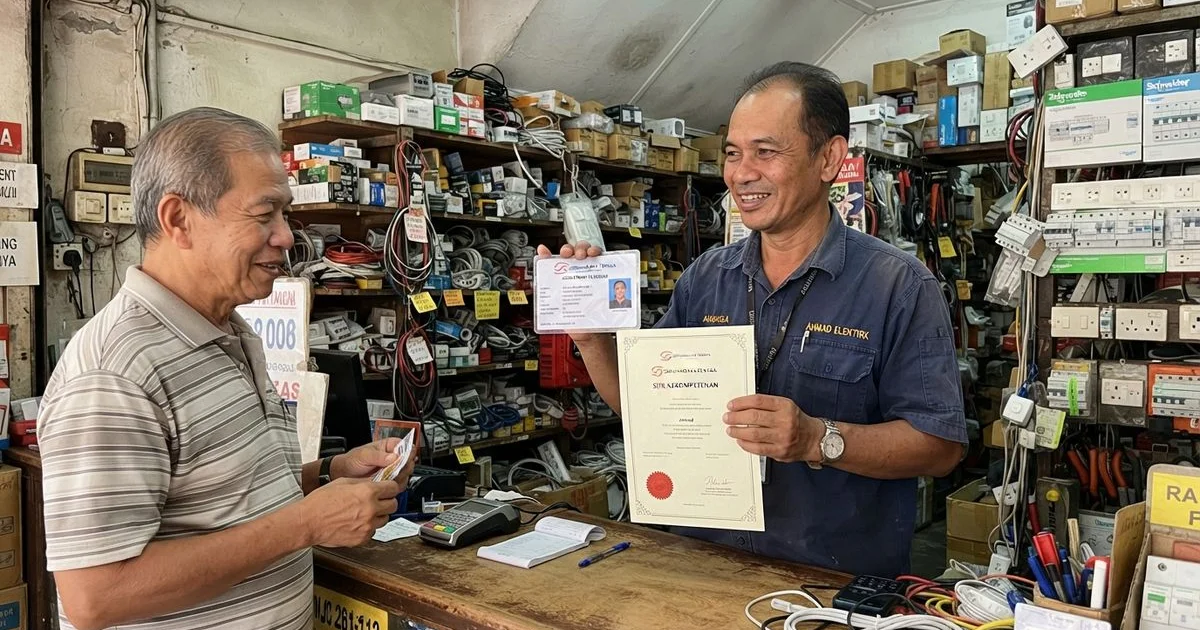
Electrical work in Malaysia isn’t a trade you can freely enter with just a toolbox and confidence. It’s regulated under the Electricity Supply Act, with oversight from Suruhanjaya Tenaga (ST), the Energy Commission. That regulation exists for a practical reason: bad wiring is one of the more common causes of house fires, and unlike a leaking tap, a wiring fault can sit invisible behind a wall for years before it fails. This is general information, not legal advice; for a specific dispute or claim, speak to a qualified professional.
Why this matters more than it might seem
It’s easy to treat licensing as paperwork that only matters to the electrician, not to you. In practice it matters more to you. If a fire or electrical fault happens later and the work wasn’t done by someone properly registered, an insurance claim can become far harder to make, and there’s no regulator to hold accountable if the job was done badly. A licensed electrician is also required to test and sign off on their own work in a way that gives you something to point to if a problem shows up down the line.
What “licensed” actually covers
Malaysian electrical work sits under a tiered system rather than one blanket qualification. A registered wireman handles standard household and light commercial wiring. Bigger jobs, higher voltages, or industrial installations need a competent person or, for the most senior scope, a chargeman. Solar installations bring in an extra layer, since the system also needs to be registered for grid connection through TNB and SEDA before it can legally feed power back.
You don’t need to memorise the exact tier structure. What matters as a homeowner is asking the right question for your job and expecting a straight answer.
| Type of work | Who should be doing it | What to ask for |
|---|---|---|
| Socket, switch, light fitting repairs | A registered wireman | Suruhanjaya Tenaga registration |
| New circuits, consumer unit upgrade, rewiring | A registered wireman, often under a competent person’s supervision | Registration details and a written scope |
| Three-phase, industrial, or high-load commercial work | A competent person or chargeman depending on scale | Competency certificate for that class of work |
| Solar panel installation | An ST-registered installer handling TNB/SEDA submission | Proof of registration and confirmation they handle the grid paperwork |
How to actually check
Asking “are you licensed” invites a yes from almost anyone. A better approach is to ask them to show their registration and, for anything beyond a small repair, ask what happens if an inspector or your insurer ever wants to see proof the work was done properly. A legitimate electrician answers this without getting defensive. Someone who brushes off the question, says it’s “not really needed for this job,” or gets vague about who actually did the work on site is worth being cautious about, regardless of how competitive their quote is.
It also helps to ask this before a deposit changes hands, not after. Once money has moved, it’s much harder to walk away if the answer turns out to be unsatisfying.
Permits and paperwork beyond the electrician’s own registration
Some jobs need more than a licensed person on site. Solar installations need TNB and SEDA approval before the system can be connected to the grid, and this paperwork is part of what you’re paying for when you hire a proper installer rather than a cheaper unregistered one. Larger consumer unit upgrades or new supply connections may also involve TNB coordination. A good electrician tells you upfront what paperwork the job needs and roughly how long it takes to clear, rather than leaving you to discover it partway through.
Can you do any of it yourself
For very minor tasks like changing a plug top or swapping a light bulb, there’s generally no issue doing it yourself. Once you’re touching fixed wiring, adding a socket, or working inside the consumer unit, that’s a different situation: it’s both a safety risk and, in most cases, work that should legally go through a registered person. A wiring fault caused by DIY work is also one of the more common triggers electricians describe when they explain why they were called out for an emergency job.
What happens if you skip this step
The most common consequence isn’t an immediate disaster. It’s a fault that develops quietly over months or years: a warm switch plate, a breaker that trips more than it used to, or a socket that’s slightly discoloured. By the time it becomes obvious, the fix is usually bigger and more expensive than if it had been done properly the first time. Checking registration before you hire costs you a few minutes. Skipping it can cost considerably more later.
If you’re comparing providers, our methodology explains how licensing signals factor into how listings are scored, and you can browse the full directory from the homepage to compare electricians across categories.
FAQ
- Is it actually illegal to hire an unlicensed electrician in Malaysia?
- For anything beyond very basic plug-and-play work, yes. Wiring, circuit installation, and consumer unit changes are regulated under the Electricity Supply Act, and the person carrying out the work needs the right registration for the job. Hiring someone without it puts you, not just them, at risk if something goes wrong.
- Can I do my own house wiring in Malaysia?
- Very minor tasks like replacing a plug top or a light bulb are generally fine, but anything touching fixed wiring, sockets, or the consumer unit should be done by a registered person. Unlicensed wiring work is a common cause of house fires and can cause problems with insurance claims later.
- What documents should I ask an electrician to show?
- Ask for their Suruhanjaya Tenaga registration and, for larger jobs, proof they're working under a competent person for that scope. A legitimate provider can show this without hesitation. For solar installations, also check they're registered to handle the TNB and SEDA paperwork.
- What happens if unlicensed work causes a problem later?
- Insurance claims for fire or damage linked to electrical faults can be complicated or denied if the work wasn't done by a properly registered person, and you may have no recourse against someone who was never accountable to a regulator in the first place.